Dr. Cosima Eibensteiner
Jansky Postdoctoral Fellow
National Radio Astronomy Observatory (NRAO), Charlottesville, Virginia, USA
–
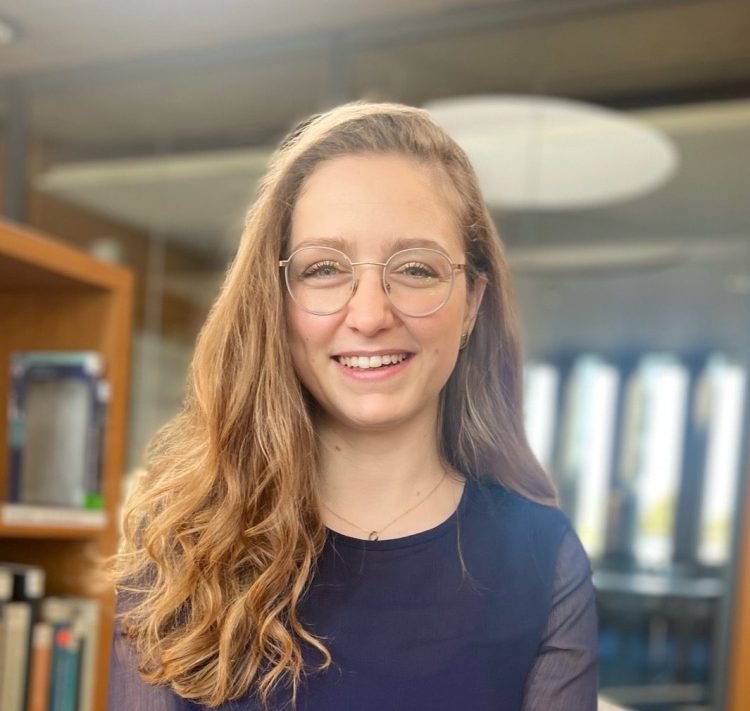
I am Cosima Eibensteiner, an Astrophysicist with a heart for science communication. I study the gas of the interstellar medium (ISM) in nearby galaxies to understand the interplay and effect on star formation (see my Research page). Currently, I am a PostDoc Jansky Fellow at the National Radio Astronomy Observatory in Charlottesville, Virginia.
I built and led multi-wavelength efforts (in international collaborations PHANGS, LGLBS, MHONGOOSE) that pair modern HI, CO (used to derive H2), mid-IR, and UV, to isolate the drivers of the molecular gas fraction and star formation efficiency. As leader of the PHANGS HI & Radio Continuum science working group, I coordinated world-class 21 cm maps into a survey famous for its CO and JWST views.
Before arriving in Charlottesville, I completed my PhD in October 2023 as a member of the International Max Planck Research School (IMPRS) at the Argelander Institute of Astronomy at the University of Bonn, supervised by Frank Bigiel and supported by the PHANGS collaboration. Before that, I was at the University of Vienna (Austria) for my M.Sc. (2016-2019) and B.Sc. (2013-2016) in Astrophysics. I have an additional degree (B.A.) in Journalism and Communication Science.
You can find more details in my CV
In my free time, I enjoy being sporty, from a bit of weight lifting to yoga to tap dancing. I like to try new vegan recipes and go for hikes, but also enjoy a quiet morning on my patio watching the sunrise with my coffee. I try to improve my drawing skills, but I am failing at the moment. In my past life, I was writing scientific articles for an Austrian broad audience (see here for example, but attention, it’s in german: link), I was a dancing teacher for classical and latin dance, was on the stage for musicals, and behind the camera as an extra for Austrian shows or international movies (e.g. Red Sparrow…)
I study the cold (molecular/atomic) interstellar medium in nearby galaxies. I’m investigating the interplay between the content of neutral atomic gas, (dense) molecular gas, and star formation, and how this gas contributes to the formation of stars. For this, I work with observational data, especially in the radio/mm-cm domain, using e.g. VLA, ALMA, SMA, IRAM-30m, PdBI/NOEMA, or MeerKAT, but I also use NASA’s space telescopes in UV and mid-IR: GALEX, WISE, and Spitzer
(see my Research page).
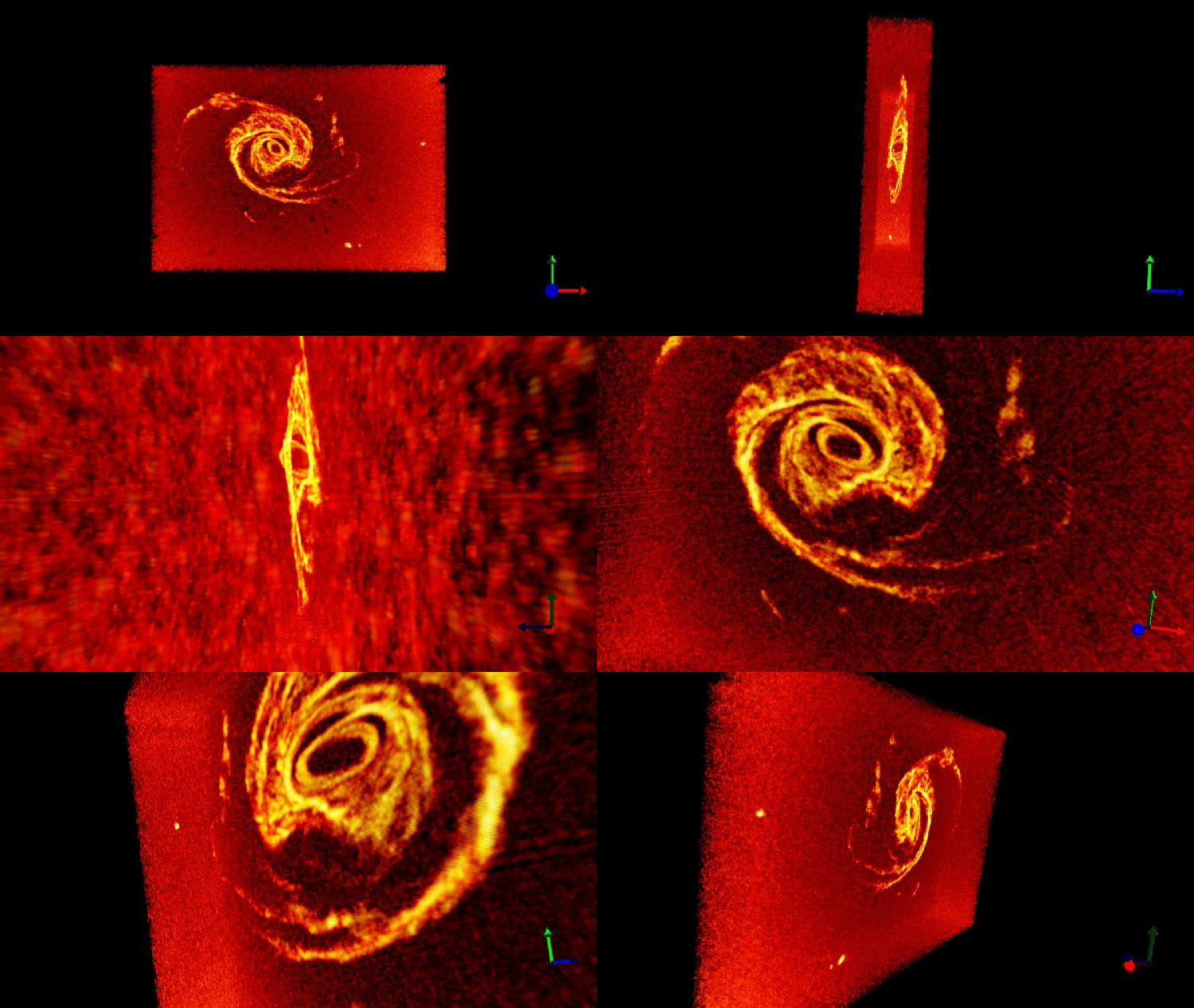
Radio observations of a nearby galaxy, the neutral atomic gas (HI) of the nearby galaxy NGC1512. These gigantic spiral arms are ~12 kpc long; that is, around 8 times the radius of how we see the Milky Way in the optical.
I am a leader of the HI and Radio Continuum Science Working group within the PHANGS collaboration. This project started with a ALMA Large Program and ever since then we collect multi-wavelength data using ground and space telescopes for ~100 galaxies.
Contact
 Cosima Eibensteiner, PhD